
After an unusually mild autumn, winter has finally tightened its grip. With more time spent indoors, the conditions are ripe for seasonal illnesses like colds, winter vomiting, flu, and Covid-19 to spread. Notably, flu has struck Scotland earlier than usual this year and here in Shetland, we have begun to see a steady increase in lab reported cases.
Of all the winter illnesses, flu can be one of the most serious, especially for older adults, pregnant women, young children and people with long-term health conditions. Vaccinations are a key factor in protecting ourselves from severe illness. But if you or your loved ones don’t fit into any of the vulnerable categories, you might find yourself asking “why bother?”
Why should I get vaccinated this winter? –
To find out more about how vaccines work, watch this short video in NHS Inform: How vaccines work | NHS inform. There are in fact, very important reasons why vaccinations are offered to a wider population beyond those that are most vulnerable, this is because of “herd immunity” or “herd protection”. To understand more about the impact that you, as an individual with a healthy immune system receiving your vaccine, can have on the population view the video clip here: Herd immunity (Herd protection) | Vaccine Knowledge Project

What else can I do to avoid getting ill and prevent spread of winter illness? –
- Practice good hand-washing – washing hands with soap and water regularly is one of the single most important things everyone can do. Hand sanitiser can be helpful but DO NOT rely on it, as it is not always effective for vomiting bugs
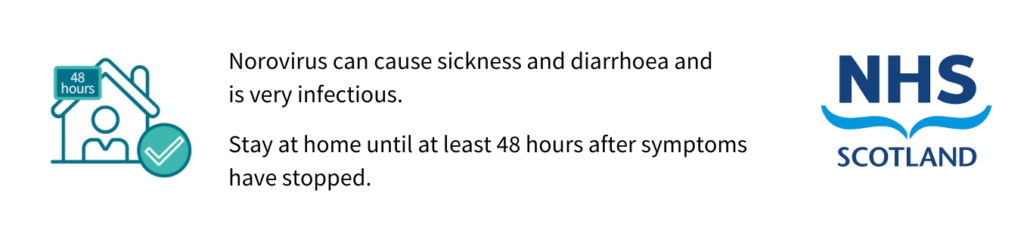
- Stay at home when ill – avoid contact with others if you have symptoms of cough, sore throat or fever. If you have had diarrhoea or vomiting, stay away from work, school or care settings until 48hrs AFTER symptoms have cleared.
- Don’t delay getting vaccinated – if you are offered winter vaccines, act now and arrange an appointment at the earliest opportunity. Contact the Vaccination Team on 01595 743319 or email shet.vaccination-team@nhs.scot
- Clean surfaces and practice respiratory hygiene – disinfect surfaces that are touched often. Cover your nose and mouth when coughing or sneezing, dispose of used tissues immediately and WASH YOUR HANDS!

If you are a parent whose child is affected by diarrhoea and/or vomiting, you can find more detailed guidance in our NHS Shetland leaflet “A guide for parents” here:
Anyone who is feeling off colour, or who has had gastrointestinal symptoms, should not visit the hospital or care homes until they are symptom-free for 48 hours. Norovirus can be particularly severe for someone who is already unwell in hospital and for older people. Information on Norovirus can be found here: Norovirus – NHS inform
Other viruses can cause the same gastrointestinal symptoms, especially in children, but they are all potentially infectious and should be managed in the same way. More information is available here: Gastroenteritis | NHS inform
Stay safe and protect others, so that we can all enjoy a happy, healthy festive season.
Blog written by Kathleen Jamieson, Health Protection Nurse Specialist, Dec 2025.
