
Why is falls prevention important?
Falls can happen to anyone. However having a fall when we’re your older can be scary and life changing. They aren’t an inevitable part of ageing and there are things we can do to prevent them.
One in three people over the age of 65 experiences a fall at least once a year. The winter months can increase the frequency and the severity of these falls due to icy conditions, cold weather and shorter daylight hours.
Here are some tips to help reduce these falls in icy conditions:
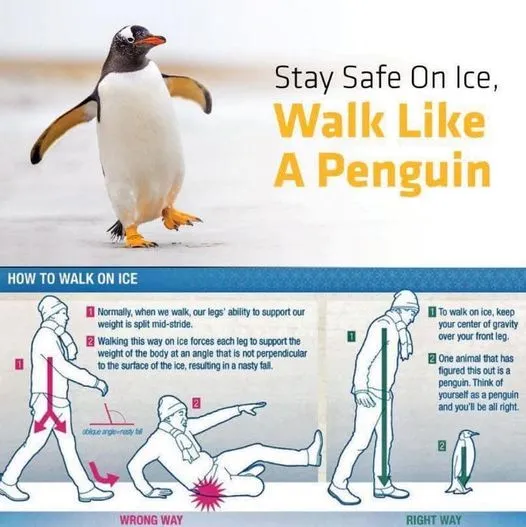
Walk like a penguin
- Point toes out slightly.
- Shuffle or take small steps.
- Extend arms for balance (keep hands out of pockets).
Footwear and walking aids
- Wear proper footwear.
- Shoes or boots with good grip, non slip soles with ankle support is ideal.
- Ensure walking aids and fitted with non slip ferrules (rubber bits at the bottom).
Planning
- Only travel if necessary.
- Use handrails and grab rails.
- Wear a big jacket and warm clothes to keep warm and for extra padding.
- Don’t rush or take shortcuts.
- Be careful when carrying items, wear a backpack or don’t carry things in front of you, and hold items by your side to help with your centre of gravity. If you don’t feel confident then please ask someone for help.
Vehicles
- Take care entering or exiting cars.
- Use multiple points of contact to aid yourself get out the car.
Clear paths
- Ask someone to help grit and de-ice pathways.
Other important tips to reduce falls:
Eyesight and hearing checks
- Going for regular eye and hearing checks.
- Especially if you experience any changes.
- If you are over 60 you should go every year to get your eyes checked, make use of that free eye tests.
Footcare
- Make sure you are wearing appropriate and nicely fitting shoes.
- Taking care of your feet, trim toe nails, look out for calluses or loss in circulation.
- If you have any pain or concerns then contact your podiatrist.
Keeping active and Strength and balance exercises
- Being physically active by moving more and sitting less has many benefits.
- This includes stronger muscles, improving balance, stamina, flexibility, reducing joint pain and maintaining brain health. Allowing you to continue the things you enjoy.
- You can stay active by walking, climbing stairs, gardening or doing housework.
- Doing strength and balance exercises 2-3 times per week.
- Follow the Super 6 exercises in the video below, or try these chair‑based exercises. Be sure to check out the Otago Class Details too—this proven strength‑and‑balance programme offers guided sessions that can help you build stability, maintain independence, and stay active with confidence.
- If you have certain medical conditions and not sure what activities you can do then please get in touch with a health professional.
Medication reviews
- Getting regular reviews, in case you no longer need some or the dose can change.
- Getting regular reviews if you take several different medications or if you experience any changes in symptoms. Especially if you feel dizzy, faint or drowsy.
- Check the instructions for certain medications some need to be taken with/without food or at a certain time of day.
- Speak your local HC to make an appointment with the pharmacist if you have any questions about your medication.
Nutrition
- Having a well-balanced diet and reducing alcohol intake is a good way to keep you up and about.
- Missing a meal can make you feel dizzy or faint.
- Looking after our bones is important. Eating a calcium rich diet will help maintain bone health.
- The NHS recommends taking Vitamin D for healthy bones and muscles and to reduce the risk falls and fractures. The body’s ability to make vitamin D from sunlight decrease with age. Since there is limited sunlight in Shetland supplementation is really important.
- Aim to have 6-8 cups of fluid a day, keeping hydrated will reduce water infections.
Home safety
- Check your home for hazards.
- E.g poor lighting, moping up spills, reducing trips hazards such as loose rugs and cables.
- Install a community alarm if you can.
- OT contacts: 01595 744319 or email dutyot@shetland.gov.uk / OTDuty@shetland.gov.uk
Have a plan
- Think about what you would do if you fall
- Always take your phone with you or wear your community alarm at all times.
- Always tell someone if you have had a fall, even if you feel ok.
- Find more advice in the Up and About booklet or discuss with a health professional.
